
Refrigerant Leak Repair in the USA
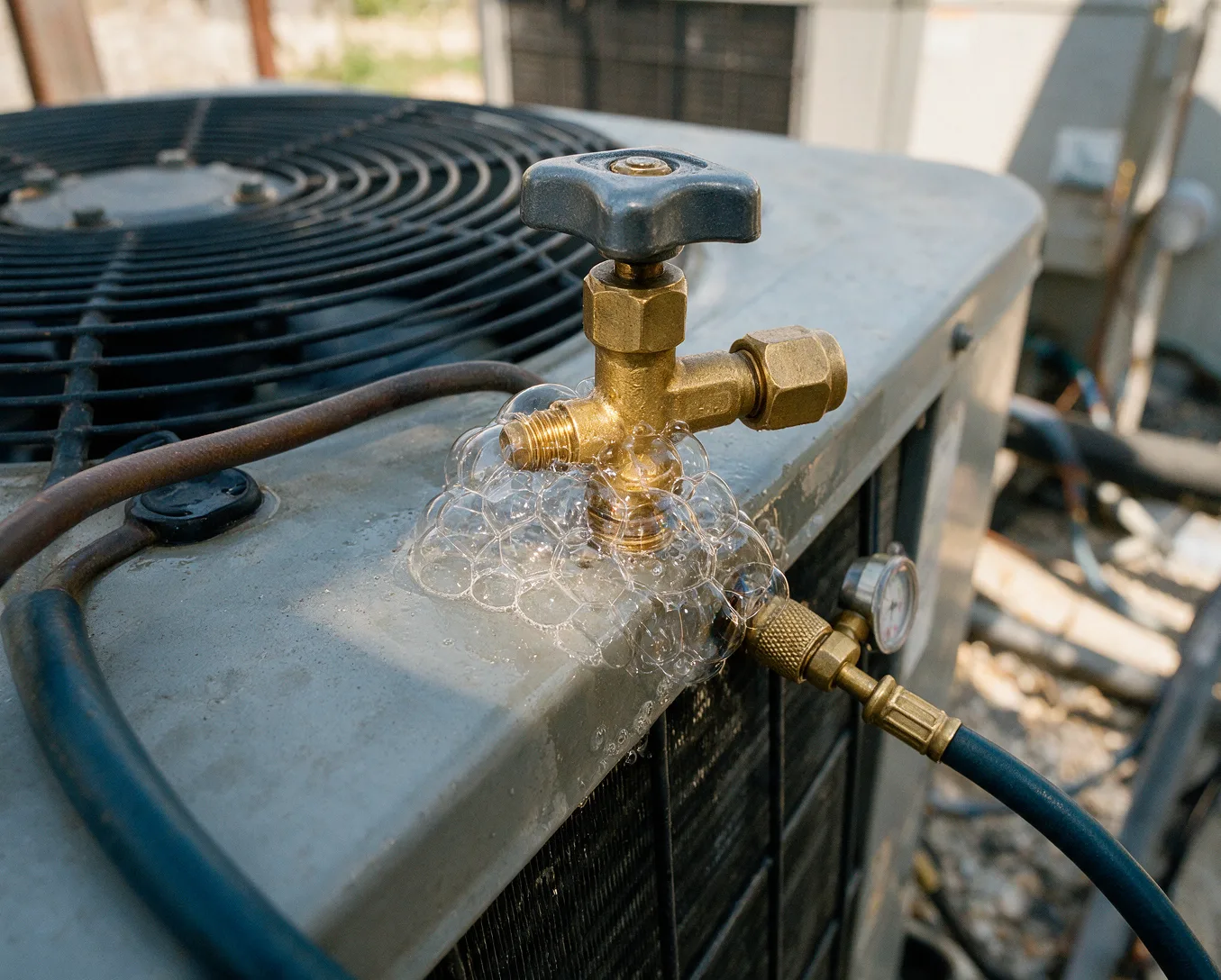
Refrigerant leaks reduce cooling capacity fast in high temperatures. Our technicians trace leaks using electronic detectors and nitrogen pressure tests on both evaporator and condenser coils. They record suction and discharge pressures before any repair work begins. Ice HVAC replaces damaged sections or brazes joints with silver alloy when corrosion or vibration has opened a path.
Low refrigerant also stresses the compressor and raises energy use. We measure superheat and subcooling values after each recharge to confirm proper flow. Homeowners first shut the system off if frost appears on the indoor coil or if a steady hissing sound is heard near the outdoor unit. Filters should be checked for blockage before calling for service. Coils need cleaning when refrigerant leak repair occurs and Ice HVAC helps across USA on homepage.
Common Indicators of Refrigerant Loss
- Ice forming on the evaporator coil or suction line during operation.
- Warm air blowing from supply vents despite thermostat settings.
- Repeated compressor short cycling under heavy load.
- Higher than normal electricity use during peak heat hours.
- Oily residue visible around fittings or coil connections.
Causes of Refrigerant Leaks
Vibration from the compressor loosens flare fittings over time and creates small openings. Corrosion from moisture and salts attacks copper tubing in both indoor and outdoor coils. Factory braze joints can develop hairline cracks when expansion and contraction repeat daily in summer heat. Our technicians inspect every accessible joint and coil surface before any pressure test.
Improper evacuation during past service leaves air and moisture that forms acids and eats through metal. Mechanical damage from lawn equipment or settling foundations also bends lines and stresses connections. Ice HVAC checks line set routing and support straps as part of every leak investigation.
Inspection and Measurement Steps
Technicians first connect gauges to read static and running pressures against expected values for the refrigerant type. They then introduce nitrogen and monitor for drops while listening for audible leaks. Electronic sniffers sweep coils, valves, and flare nuts. Superheat and subcooling calculations confirm whether the charge has dropped below design levels.
Coil fins are examined for dirt that restricts airflow and masks leak symptoms. Capacitor condition is checked because low voltage can mimic low-refrigerant performance. Ice HVAC records all readings on site so the homeowner sees exactly which component failed.
Repair and Replacement Options
Small pinholes in accessible tubing can be brazed after the line is isolated and evacuated. Larger leaks in evaporator coils usually require coil replacement rather than repeated patching. Condenser coils are swapped when corrosion covers multiple circuits. We recover remaining refrigerant, perform a triple evacuation, and recharge with the exact factory-specified amount.
New service valves or flare nuts are installed when threads are stripped. Line sets are flushed and pressure tested again before final connection. Ice HVAC matches the refrigerant type already in the system and verifies oil return after the repair.
Homeowner Actions Before Arrival
Turn the thermostat to off and the breaker to the outdoor unit if frost or hissing is observed. Replace the indoor filter if it is clogged because restricted airflow can worsen icing on the coil. Note the age of the system and any recent service history to share with the technician.
Avoid adding refrigerant from cans or attempting to seal leaks with stop-leak products. These actions mask symptoms and can damage the compressor. Ice HVAC arrives with the correct gauges, nitrogen, and recovery equipment to diagnose and correct the leak in one visit.
Refrigerant Leak Repair questions
How do technicians find a refrigerant leak?
Our technicians connect gauges to read pressures then pressurize the system with nitrogen. Electronic detectors sweep every coil and fitting while they listen for escaping gas. Superheat and subcooling values guide them to the exact circuit that lost charge.
Can a leak be repaired or must the coil be replaced?
Small accessible leaks on line sets can be brazed after isolation. Evaporator or condenser coils with multiple pinholes or widespread corrosion are replaced. Ice HVAC performs a full pressure test after any repair to confirm the system holds.
What happens if refrigerant runs too low?
Low charge causes the compressor to overheat and the evaporator to ice over. Efficiency drops sharply and the system may shut down on safety limits. Ice HVAC measures pressures and temperatures first to prevent further damage.
What should a homeowner check first?
Confirm the indoor filter is clean and the thermostat is calling for cooling. Note any ice on lines or unusual sounds near the outdoor unit. Shut the system off if frost appears and wait for the technician to arrive with proper recovery tools.
Schedule Refrigerant Leak Repair
Ice HVAC restores proper refrigerant levels and seals leaks in cooling systems across the USA.