
Condenser Repair in the USA
Ice HVAC technicians focus on the outdoor condenser unit where the compressor pushes refrigerant through the coil for heat release. Serious summer heat loads strain the fan motor and capacitors first. Restricted airflow from debris or bent fins raises head pressure until the system shuts down on safety. Our crews measure amperage draw and refrigerant pressures on site to isolate the exact fault before any parts are replaced.
A failing condenser coil often develops pinhole leaks from corrosion or vibration. When refrigerant charge drops the compressor overheats and internal valves wear. Homeowners can clear leaves and grass from the cabinet sides and confirm the disconnect is closed, yet any pressure test or electrical diagnosis requires the proper gauges and tools only a technician carries. Capacitor checks come first for condenser repair handled by Ice HVAC in the USA at the AC Repair homepage.
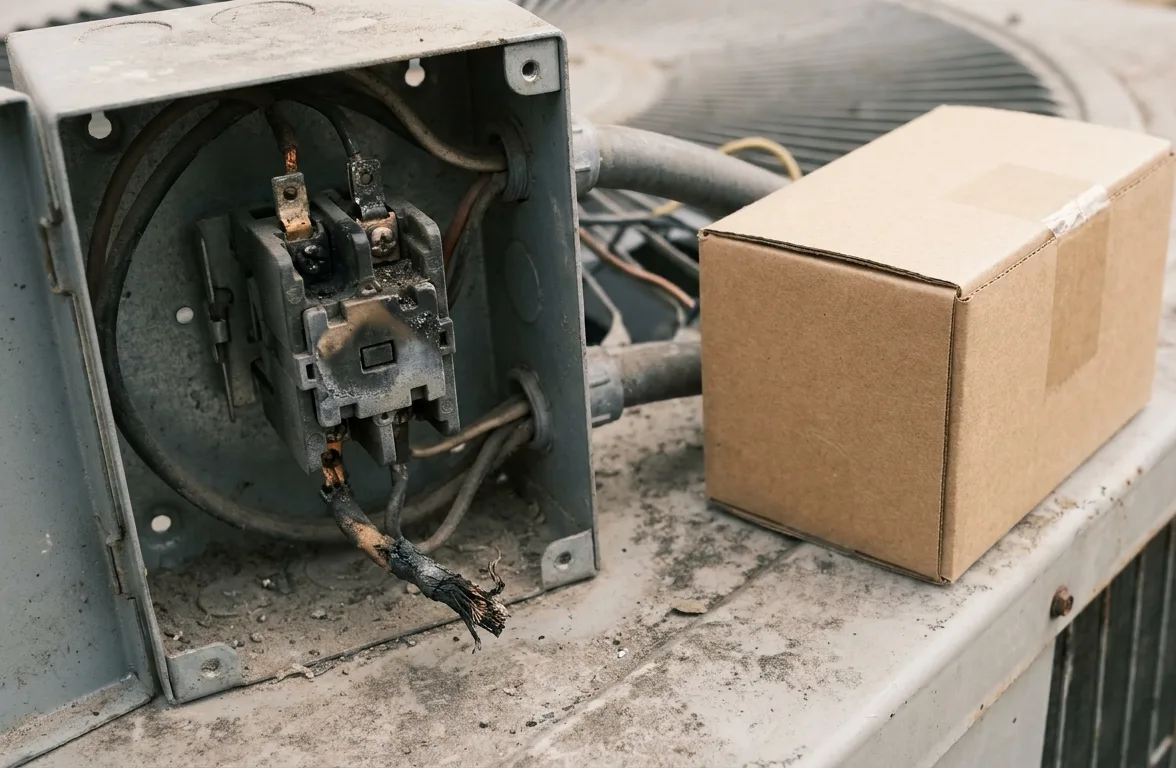
Warning Signs of Condenser Problems
- Grinding or buzzing sounds from the outdoor cabinet.
- Warm air blowing from supply vents instead of cool.
- Unit runs constantly yet indoor temperature stays high.
- Visible oil stains or frost on the condenser coil.
- Breaker trips when the outdoor fan attempts to start.
Common Condenser Failure Points
The compressor motor draws high locked-rotor amps when starting under low refrigerant or dirty coils. Our technicians clamp meters on the common and run windings to confirm whether the start capacitor has failed or the compressor itself has seized. A single bad run capacitor can prevent the fan from reaching speed and cause the entire system to overheat.
Condenser coils collect pollen and dust that reduces heat transfer. When fins are flattened from hail or lawn equipment the effective surface area shrinks and discharge pressure climbs. Technicians straighten fins with a comb and wash the coil from inside out to restore airflow before charging the system to factory specifications.
Fan motors fail when bearings dry out or windings short from moisture. We check blade balance and motor capacitor values with a multimeter before deciding between motor replacement and full unit change-out.
Diagnostic Steps Technicians Perform
Arrival checks begin with line voltage at the disconnect and contactor pull-in. Low voltage from a failing transformer prevents the compressor from engaging even when the thermostat calls. Next we attach manifold gauges to read suction and liquid pressures while the system stabilizes.
Infrared thermometer readings on the coil surface reveal hot spots that indicate blocked circuits inside the coil. Amperage on each leg of the compressor is compared to nameplate ratings. Any deviation points to valve plate damage or liquid slugging that requires recovery and component replacement.
Electrical components receive insulation resistance tests to rule out ground faults. These measurements guide whether a capacitor swap restores operation or a deeper compressor issue demands recovery of refrigerant and brazing of new lines.
Repair Versus Replacement Decisions
When the compressor has failed after repeated low-charge operation the correct path is recovery of remaining refrigerant followed by compressor replacement or full condenser change-out. New units arrive with factory nitrogen holding charge and matched expansion devices for the indoor coil.
Coil leaks can be repaired by cutting out the damaged circuit and brazing in a new section when access allows. Larger leaks or multiple pinholes usually lead to coil replacement because repeated patching creates flow restrictions and future failure points.
Fan motor and capacitor replacements are completed with OEM-rated parts that match the original horsepower and microfarad values. After any repair the system is leak-checked under nitrogen pressure then evacuated to below 500 microns before final refrigerant weighing.
Parts and Materials Used on Site
We stock dual-run capacitors rated for 370 or 440 volt operation and motors with the correct frame size and RPM for common condenser models. Copper tubing and silver-bearing brazing rod are carried for leak repairs that require cutting and rejoining lines.
Refrigerant is weighed in according to the data plate once the system passes a standing pressure test and triple evacuation. New contactors and start-assist kits prevent repeat failures on high-amp compressors that operate in continuous heat.
All recovered refrigerant is handled per EPA Section 608 rules and returned to the same circuit. No mixing of refrigerant types occurs during any Condenser Repair performed by Ice HVAC crews.
Condenser Repair questions
What does a homeowner check before calling for Condenser Repair?
Clear grass clippings and leaves from the sides and top of the cabinet. Confirm the outdoor disconnect switch is in the on position and the thermostat is set to cool. Note any unusual noises or whether the fan blade spins when the unit tries to start. Avoid opening electrical panels or adding refrigerant.
How long does a typical condenser repair take?
Capacitor or contactor replacement finishes in under an hour once power is isolated. Fan motor swaps require blade removal and wiring verification. Compressor or coil replacement involves refrigerant recovery, brazing, and evacuation that extends several hours depending on access and charge amount.
Can a leaking condenser coil be patched?
Small accessible leaks allow circuit isolation and brazed repair when the coil remains structurally sound. Multiple leaks or corrosion across several rows usually require full coil or unit replacement to restore reliable operation and prevent repeated service calls.
What happens if the compressor has failed?
Technicians recover remaining refrigerant, cut out the old compressor, and braze in a new one with matched electrical components. The system receives a nitrogen pressure test, triple evacuation, and precise refrigerant weighing before restart and performance verification.
Schedule Condenser Repair
Ice HVAC crews arrive with gauges, meters, and stocked parts to restore condenser operation.